

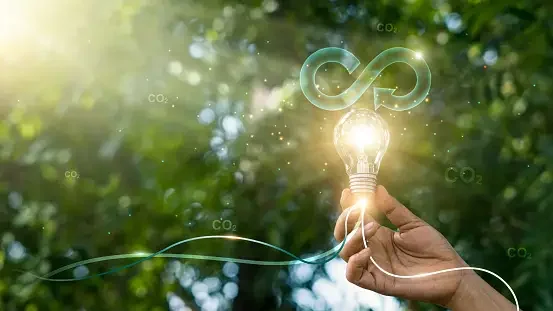
The transition to a circular economy is a revolution that aims to preserve the conditions of habitability for living species. In the face of current environmental challenges, it is essential to rethink our economic model and find sustainable solutions. The circular economy offers an innovative approach to reduce waste, preserve natural resources and encourage the reuse of materials. Companies can improve their profitability while contributing to environmental preservation.
The principles of the circular economy
The circular economy is based on three fundamental principles:
- Reducing waste, by encouraging the reuse and recycling of products, replacing the linear model with material loops.
- The sustainable use of natural resources, by encouraging the recovery and reuse of existing materials rather than the extraction of new raw materials.
- Innovation for sustainability, creating repairable and recyclable products and stimulating research in new sectors.
Environmental benefits of the circular economy
The circular economy offers three major environmental benefits:
- Considerably reducing the amount of waste sent to landfill, by extending the useful life of products.
- Contributing to the preservation of natural resources by reusing existing materials and components, thereby preserving natural ecosystems.
- Reducing greenhouse gas emissions, since recycling and reuse generally require less energy than manufacturing from virgin raw materials.
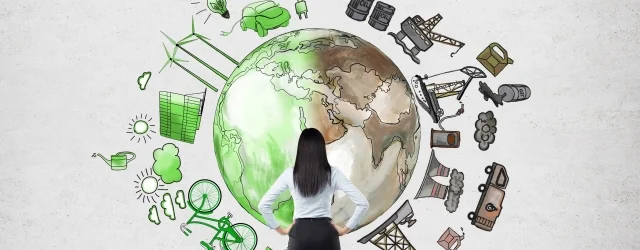
The economic benefits of the circular economy
The circular economy offers significant economic benefits:
- Lower costs related to production and the supply of raw materials, thanks to the recovery and reuse of products.
- It encourages innovation and job creation in emerging sectors such as recycling, repair and remanufacturing.
- It opens up opportunities for new forms of collaboration between companies, enabling the exchange of materials and components.
Examples of successful circular economy initiatives
In the textile industry, by recycling used clothing, companies create new products at lower cost, reducing textile waste in landfill while meeting demand for sustainable products. Although the transition requires larger initial investments, the long-term economic benefits generally outweigh the initial costs.
Implementing the circular economy in companies
Here are the steps to follow:
- Carry out an in-depth analysis of material and waste flows to identify opportunities for recovery, recycling and reuse.
- Raise awareness and train employees in the principles of the circular economy.
- Collaborate with suppliers and partners throughout the supply chain.
- Measure and track progress using key performance indicators.
Case studies: successful initiatives
- Patagonia encourages its customers to repair their clothes instead of throwing them away, by offering free repair services to extend the lifespan of its products.
- Philips offers rental services for its LED products: customers pay a monthly subscription while Philips handles maintenance and end-of-life recycling, retaining ownership of the products.
The challenges of the transition to a circular economy
Three major challenges have been identified:
- The lack of regulation and policies favorable to the circular economy, requiring a clear regulatory framework and incentive policies.
- The lack of awareness and understanding among consumers, requiring awareness campaigns and reward programs.
- The need for significant investment in technologies and infrastructure to rethink production processes.
Government policies and regulations supporting the circular economy
The European Union has adopted a circular economy action plan that includes measures to reduce waste, promote recycling and encourage the reuse of products. Strict waste management regulations require companies to adopt circular practices. Governments are also encouraging the transition by offering financial incentives (subsidies, tax breaks) to companies adopting circular practices.
The circular economy in practice: more case studies
- Interface, a global flooring company, has set itself the goal of becoming a fully circular company by 2020, with initiatives to collect and recycle old floor coverings, reuse recovered materials and use renewable energy sources.
- Renault has adopted a circular approach to the end of life of vehicles, with a remanufacturing program that recovers and reuses materials and components, reducing automotive waste.
Adopting the circular economy for a sustainable future
These case studies show that the circular economy is a feasible strategy for companies in different sectors, and that it can generate economic benefits while reducing environmental impact.