Which innovation methods make it easier to integrate the circular economy?
As a reminder, the circular economy is an economic model that aims to reduce waste and maximize the use of resources by reusing, recycling or repairing them. Unlike the linear economy, where raw materials are thrown away after use, it offers a more responsible and sustainable approach, as part of an effort to preserve the environment and fight waste.
The importance of training for a circular economy
For the circular economy to be implemented effectively, companies and individuals need to be trained in the principles and methods of this economic model. This raises economic actors' awareness of the importance of the circular economy and encourages them to adopt more responsible practices.
Many courses now support companies in their transition. Circulab Academy offers customized programs to integrate the principles of the circular economy. These courses enable companies to understand the challenges of the circular economy and resilience, identify the opportunities it offers, and put suitable strategies in place.
Innovation serving the circular economy
Innovation is a key element for a successful transition to a circular economy. The design, manufacture and consumption of products need to be rethought to make them more durable and reusable. Companies need to develop innovation strategies that integrate circular principles.
Circular design consists of designing products and services by considering their environmental impact over their entire life cycle. This means reducing the consumption of raw materials, using recyclable materials and encouraging reuse or repair. This approach makes it possible to create more durable products while reducing production costs and standing out from the competition.
The Circular Canvas, the key innovation tool
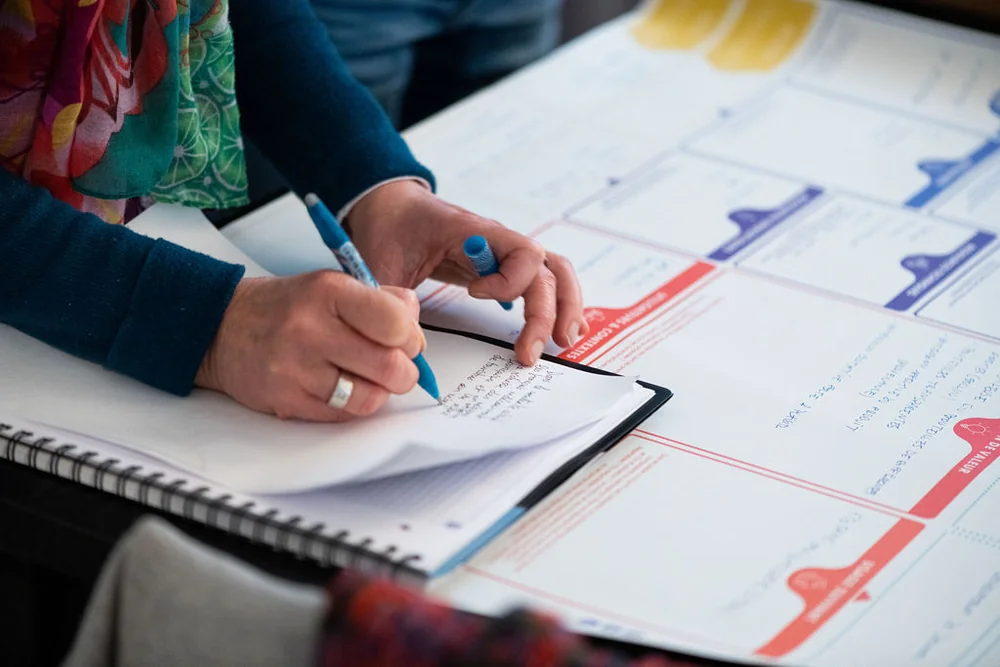
To implement a circular economy, it is important to rethink your business model. The Circular Canvas integrates circular principles into the company's strategic thinking.
This model proposes rethinking the different stages of the product life cycle by adopting a circular approach. This means reducing the consumption of raw materials, encouraging reuse and repair, setting up effective collection and recycling systems, and developing more responsible sales and distribution models.
Value creation in a circular economy
Value creation is not limited to the production of goods and services alone. It also includes environmental preservation and waste reduction. Companies adopting a circular approach create value through more responsible and sustainable practices.
By offering durable and reusable products, companies build customer loyalty and stand out. By reducing the consumption of raw materials and focusing on reuse, they can also reduce their production costs and improve their profitability.
The outlook for a circular economy
The circular economy offers many opportunities for companies committed to a responsible approach. Beyond environmental preservation, it creates new jobs in repair, recycling and reuse.
More and more companies are integrating these principles into their business model, with governments encouraging this transition through incentive policies. It is therefore essential that companies train and innovate to adapt to this new, more responsible and sustainable economy.
In short
Adopting a circular approach in your company can not only help preserve the environment, but also improve your economic performance and your image. Discover the hands-on courses offered by Circulab Academy.