
This article draws on research conducted by Auxilia and Circulab on behalf of ADEME and AFD (the French Development Agency), combining a literature review with interviews with businesses, experts, and local and international institutions. Five major geographic regions were studied: the Mediterranean (Maghreb and Mashreq), Sub-Saharan Africa, India, Vietnam, and Latin America.
Having explored circular economy definitions and the actors driving it internationally, it's time to look at concrete action. This panorama presents 12 initiatives selected for being innovative, replicable, and representative, based on five levers identified as priorities for deploying circular economy internationally: resource and material efficiency, strengthening Extended Producer Responsibility (EPR) schemes, extending the lifespan of goods, plastics recycling, and financing mechanisms1.
Unless otherwise noted, the figures presented below come from interviews conducted with project leads and their public communications2.
What you should remember:
- These 12 initiatives cover complementary levers and goals for a systemic deployment of circular economy: from financing to material efficiency, through recycling and extending product lifespans.
- They combine public and private financing, international scale, and strong local anchoring — the winning combination for successful deployment.
- Several of them rely as much on behavior change and knowledge-sharing as on technological innovation.
Financing mechanisms and models
TSKB, Turkey: bank intermediation serving circular projects
AFD granted an €80 million loan to the Industrial Development Bank of Turkey (TSKB) to support circular investments and help businesses evolve their practices, complemented by a €500,000 technical assistance program. Target: 5,000 tonnes of CO2 equivalent avoided per year, with at least 10 businesses supported.
Ananas Anam, Philippines: turning agricultural waste into extra income
The company produces Piñatex®, a non-woven textile made from pineapple leaf fibers, an abundant agricultural byproduct. By purchasing these fibers from local cooperatives, Ananas Anam generates an additional income of €2 per m² of Piñatex® produced, and supports 650 indirect jobs.
Strengthening Extended Producer Responsibility (EPR) schemes
Latitud R, Latin America: a regional multi-stakeholder platform
Jointly led by the Inter-American Development Bank, the Avina Foundation, and major brands such as Coca-Cola, PepsiCo, and Nestlé, this multi-stakeholder platform develops inclusive recycling across 17 countries in Latin America and the Caribbean. It trains around 4,000 new informal recyclers each year and supports their integration into cooperatives.
French State: a fund dedicated to reuse and repair
Since 2024, France's EPR schemes have devoted part of their eco-contributions to funding reuse and repair, alongside recycling. The "repair bonus," funded with more than €60 million for the electrical and electronic equipment sector, financed around 400,000 repairs between December 2022 and May 2024.
Extending the lifespan and usage of goods
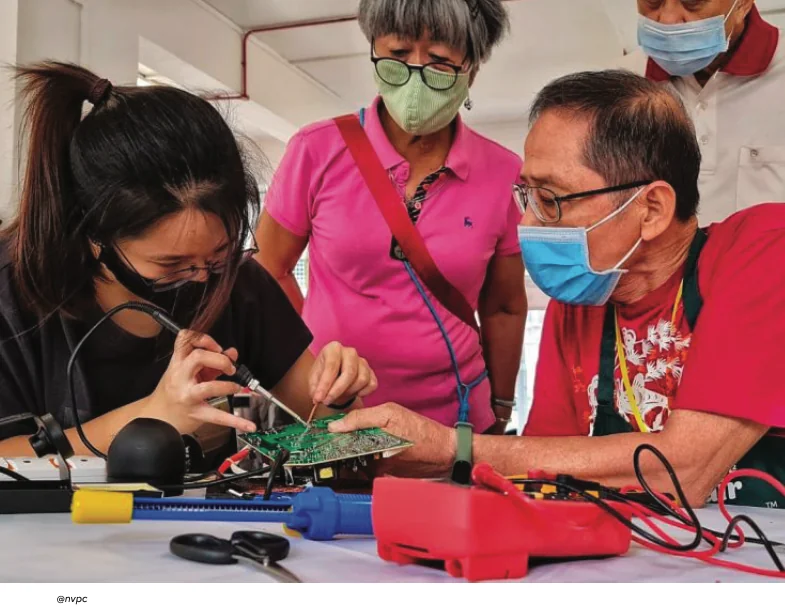
Repair Kopitiam, Singapore: a local community of volunteer repairers
Similar to repair cafés, this network holds monthly free repair sessions run by trained volunteers. Since 2014, more than 4,500 people have been trained in repair, with a 61% success rate for repairs carried out in 2021.
Product Circularity Datasheet, Luxembourg: a standard for product circularity
Led by the Luxembourg Ministry of the Economy, this open and accessible data-exchange standard documents the circular characteristics of products, components, and materials throughout the value chain. It already involves 50 companies from 12 European countries and has been incorporated into the ISO/DIS 59040 standard.
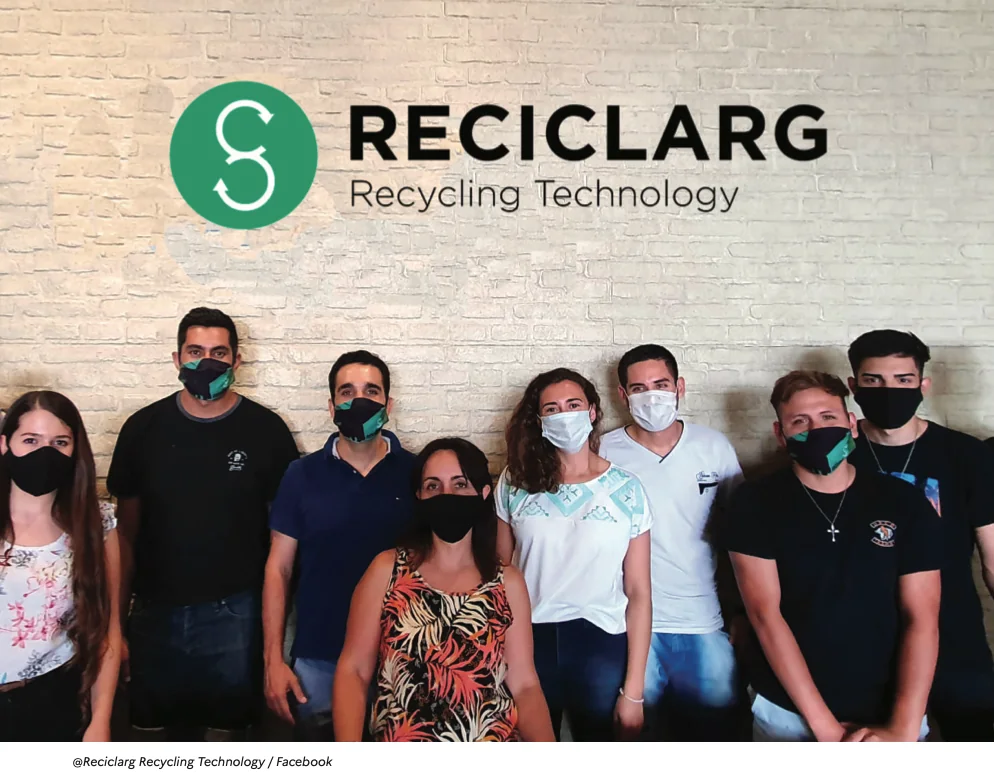
Reciclarg, Argentina: turning e-waste into new resources
This triple-impact, B Corp-certified company covers the entire electrical and electronic waste management chain, from refurbishment to upcycling into jewelry, through to metal recovery. In 2023, it processed 87 tonnes of e-waste and put 1,255 refurbished products back on the market.
Quadloop, Nigeria: turning e-waste into solar-powered products
The company manufactures solar lamps made of 70% materials from end-of-life electronics, aimed at areas without access to the electricity grid. In 2023, 200 lamps were produced, recovering 880 kg of e-waste.
Plastics recycling
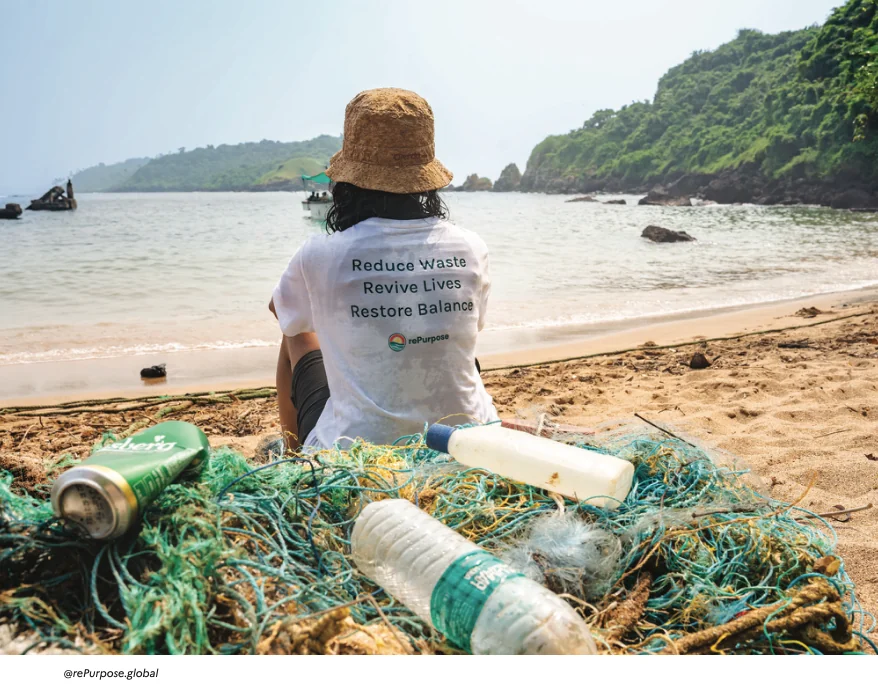
rePurpose Global, worldwide: a platform of solutions against plastic pollution
This platform allows brands worldwide to fund local plastic collection and recycling projects across seven countries in Asia, Africa, and Latin America, through a "plastic credits" system. In 2024, the company generated $12.1 million in revenue and prevented 6,350 tonnes of plastic waste.
BGS Recyplast, Republic of Guinea: micro-factories for plastic recycling
This company turns plastic waste into construction pavers, using containerized micro-factories set up close to waste sources, with a production capacity of 600 pavers per day and 100 tonnes of plastic processed per year.
Resource and material efficiency
Nagpur Municipal Corporation and MahaGenCo, India: a public-private partnership benefiting water resources
This partnership between the municipality of Nagpur and a public electricity company led to the construction of a wastewater treatment plant, with the treated water reused to cool thermal power plants. Result: 130 million liters of freshwater saved every day, benefiting an additional 1.5 million people with access to drinking water.
Low Tech Lab, France: promoting low-tech innovation
This association catalogs and shares, through an open platform, useful, accessible, and sustainable low-tech techniques and innovations, documented in more than 100 countries. It currently runs 27 local communities and documents more than 1,000 low-tech initiatives worldwide.
In short
This selection is based on in-depth work: starting from desk research and around 40 interviews, 50 initiatives were identified and assessed against clear criteria (strategic relevance, innovative or replicable nature, impact on circular economy, project maturity), before narrowing it down to 12 for this panorama.
These examples show that ambitious circular economy action is already underway across the world. To identify the levers most relevant to your organization and build a strategy suited to your context, Circulab Academy offers training to build expertise in circular economy and move, in turn, from insight to action.
Sources:
- Research conducted by Auxilia and Circulab on behalf of ADEME and AFD
- Interviews with project leads