
This article draws on research conducted by Auxilia and Circulab on behalf of ADEME and AFD (the French Development Agency), combining a literature review with interviews with businesses, experts, and local and international institutions. Five major geographic regions were studied: the Mediterranean (Maghreb and Mashreq), Sub-Saharan Africa, India, Vietnam, and Latin America.
Understanding the definitions of circular economy is a first step. Identifying who is acting, at what level, and with what means is a second — just as useful for building an effective strategy or choosing the right cooperation partners.
A growing number of organizations are mobilizing today around circular economy on an international scale, with complementary roles that, together, are shaping an ecosystem still very much in the making.
What you should remember:
- Four complementary roles structure international action: setting the framework, financing, providing expertise, and ensuring local anchoring.
- The European Union plays a driving role, both through its investments and its regulatory framework, which inspires many partner countries.
- Initiatives unfold around three areas: the legal framework, knowledge and expertise, and infrastructure projects.
Four complementary roles that structure action
Our analysis of international cooperation actors reveals four major functions, carried out by different types of organizations:
- Defining the conceptual framework and objectives. UN agencies, in particular the United Nations Development Programme (UNDP), the United Nations Environment Programme (UNEP), and the United Nations Industrial Development Organization (UNIDO), lead initiatives that mobilize broadly around specific objectives and sectors.
- Providing human, technical, and financial resources. Development agencies and banks, such as the European Investment Bank (EIB), the African Development Bank (AfDB), German development cooperation (GIZ), or the French Development Agency (AFD), deploy projects across multiple countries at once.
- Providing expertise and appropriate tools. Specialized think tanks and consultancies, such as the Ellen MacArthur Foundation, Circle Economy, or Chatham House, produce much of the reference material on the subject. In India, this expertise is provided locally by research institutes such as TERI.
- Ensuring local anchoring and adapting approaches. Regional networks, such as the African Circular Economy Alliance (ACEA), the Circular Economy Coalition for Latin America and the Caribbean (CELAC), or the African Circular Economy Network, adapt broad guidelines to local realities.
The European Union, a leading driver of investment
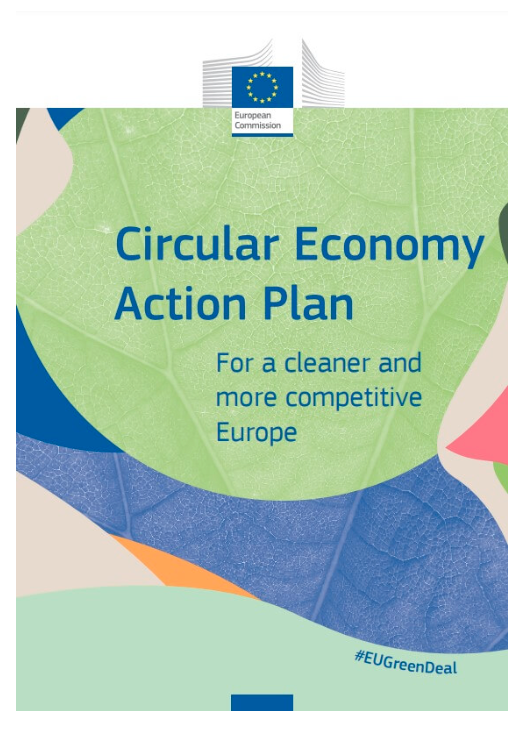
Within this international ecosystem, the European Union holds a leading position, through significant human and financial investment. Between 2018 and 2022, the European Investment Bank invested $3.4 billion in circular economy and co-financed 118 projects1. The European legislative framework, particularly on eco-design and reuse, now serves as a reference for many partner countries: the first European circular economy action plan (2015) already outlined 54 actions, before a second plan (2020) set the goal of doubling the share of recycled materials reintroduced into the European economy by 20302.
At the national level: ministries and actors on the ground
At the national level, international cooperation stakeholders mainly connect with two families of actors. Environment ministries are the most engaged, approaching the subject from the angle of environmental footprint and waste management. Industry and economy ministries are also involved, particularly in drafting regional roadmaps, depending on local economic specifics.
On the ground, committed entrepreneurs innovate through new processes and materials, while civil society raises awareness and promotes new consumption patterns such as repair or reuse. Traditional businesses, for their part, are gradually developing international partnerships — a dynamic set to strengthen as teams build more expertise on these topics.
Five actors embodying this dynamic
Among the many organizations active on this topic, five structures illustrate these different levels of involvement particularly well:
- UNEP, through the Global Alliance on Circular Economy and Resource Efficiency (GACERE), an alliance co-initiated with the European Union that brings together representatives from 14 countries across Latin America, Sub-Saharan Africa, and the Maghreb.
- Expertise France, a subsidiary of AFD, which supports the transition to an inclusive circular economy in partner countries, notably through the "Rethinking Plastics" project in East and Southeast Asia.
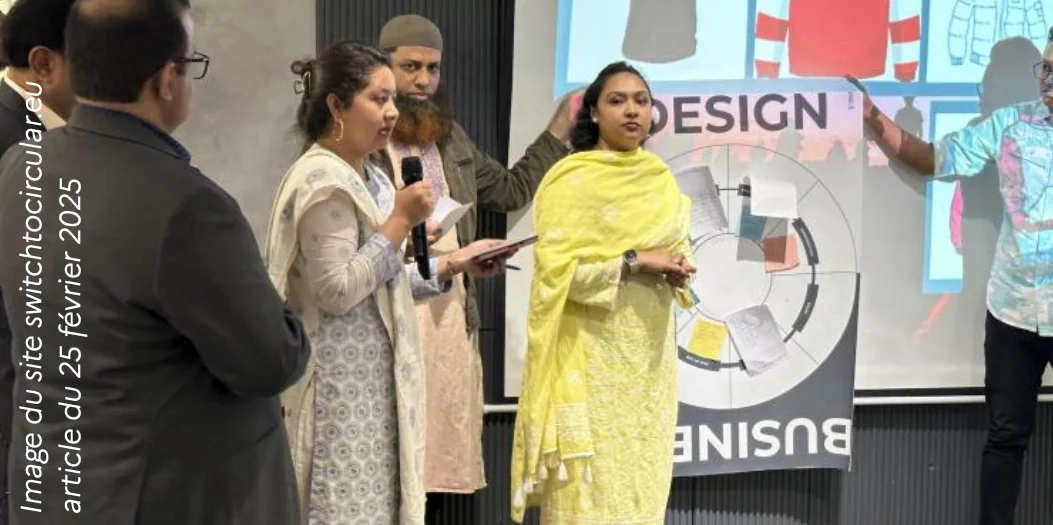
- Chatham House, a London-based research institute, which coordinates, for example, the "Switch to Circular Economy Value Chain" program, funded by the European Union, to support the transformation of value chains in textiles, plastics, and electronics.
- TERI (The Energy and Resources Institute), an Indian think tank that helped develop India's Extended Producer Responsibility framework for electrical and electronic waste, incorporating the informal collection sector.
- The African Circular Economy Network, an independent African network built around four pillars: research, training, entrepreneur support, and partnership project development.
Initiatives spanning three complementary areas
The bilateral and multilateral initiatives identified fall into three main areas:
- The legal and policy framework: studies, coalitions, and alliances to advance regulations and public policy.
- Knowledge and expertise: exchange platforms, training and awareness programs, and centers of expertise and research.
- Projects and infrastructure: acceleration programs, technology partnerships, and the creation of value-recovery loops.
Five initiatives illustrate this diversity of approaches well:
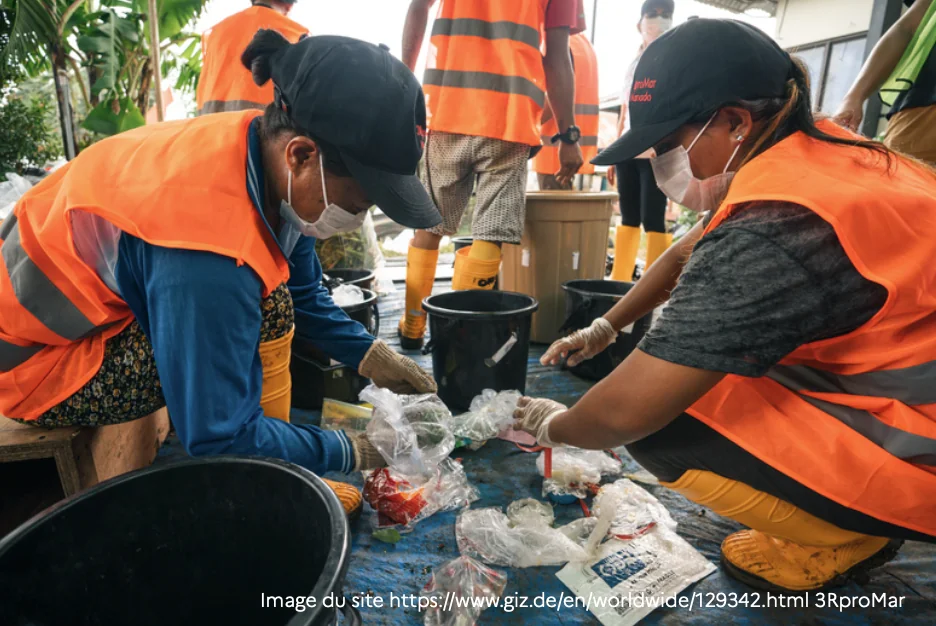
- 3RproMar, a regional project co-organized by GIZ and the ASEAN Secretariat to combat plastic waste in Southeast Asia.
- The Circular Economy Coalition for Latin America and the Caribbean, coordinated by UNEP.
- ACEF (the African Circular Economy Facility), a multi-donor trust fund led by the African Development Bank.
- The Resource Efficiency Initiative (EU-REI), a partnership between the European Union and the Indian government.
- The European Union's SWITCH programs, deployed across the Mediterranean, Asia, and Africa.
In short
This landscape of actors, rich and constantly evolving, offers many opportunities for collaboration for organizations looking to engage internationally. Learning about these networks and how they operate makes it easier to identify the right partners and speed up the move to action. Circulab Academy supports this skill-building journey through its training programs dedicated to circular economy and its actors.
Sources:
- Figures cited by the European Investment Bank
- European Commission, Circular Economy Action Plan, 2015 and 2020